
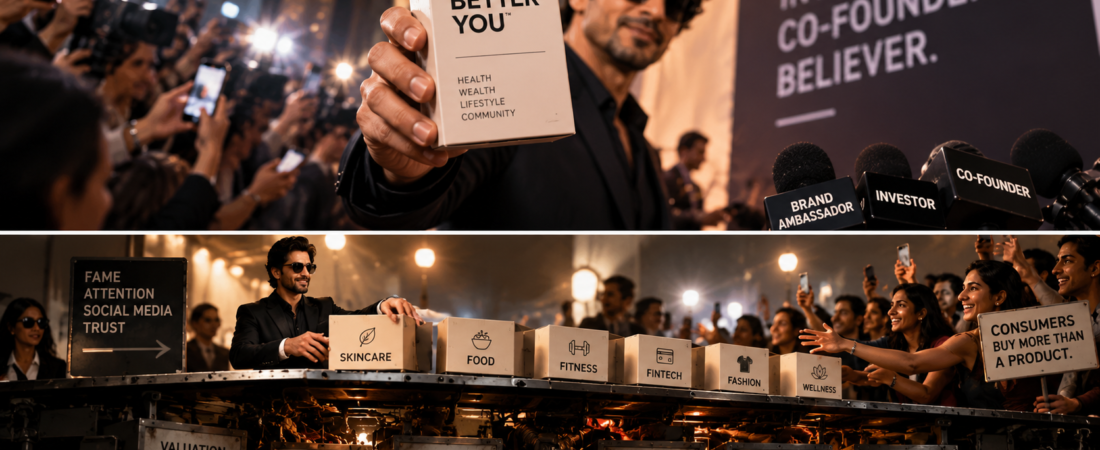
When fame becomes equity, consumers are buying more than a product. They are buying a relationship with a public image.
Most coverage of this subject begins with the loudest event. The more useful question is what sits underneath it, who benefits from the dominant explanation and what ordinary people may not be seeing.
Celebrities have always influenced what people wear, watch and buy. The newer shift is more direct: public figures are taking equity in startups, participating in product decisions and presenting themselves as business partners rather than just endorsers.
This can be useful. A celebrity may bring distribution, attention, creative instincts and a community that would otherwise cost millions to reach. But fame is not the same as operational competence, and audience trust is not a substitute for due diligence.
The risk is psychological. Consumers often read celebrity involvement as an informal quality certificate. Investors may read it as marketing leverage. Founders may read it as access. Everyone sees value, but not everyone sees the same risks.
Transparency matters. What is the celebrity’s role? Are they paid, invested, advising or merely appearing in a campaign? What happens if the product fails? Does the public receive a clear disclosure or another carefully edited success story?
Celebrity capital can accelerate a brand. It can also make failure more emotionally confusing, because people feel they were not just sold a product, they were invited into someone’s personal circle.
The point is not to manufacture certainty. It is to leave room for evidence, competing explanations and the possibility that the first version of the story is incomplete.
Questions worth carrying with you
- Should celebrity investments require stronger public disclosure?
- How much trust should a consumer place in a famous face?
- Can a celebrity be held accountable for the business claims made around a startup?
Suggested internal links
- Link to “The Startup Funding Party Is Not the Business Model” with a natural anchor in the body or closing section.
- Link to “Quick Commerce and the Price of Convenience” with a natural anchor in the body or closing section.
Social-media adaptations
- Instagram/Facebook: When fame becomes equity, consumers are buying more than a product. They are buying a relationship with a public image. Read the full analysis on Baal Ki Khaal. We are not here to stop at the headline. #BaalKiKhaal #ContextMatters
- LinkedIn: Celebrity Investors and the Business of Borrowed Trust. The important question is not only what happened, but how incentives, institutions and public perception shape the story.
- X: Celebrity Investors and the Business of Borrowed Trust. The headline is only the entrance. The real story is in the context, incentives and consequences. What are we missing?
- Short-video hook: “Everyone is discussing celebrity investors and the business of borrowed trust. But what if the most important part is what nobody is discussing?”